

ETMday: Entrepreneurship Event Website
ETMday (Emprende tu Mente) is a large-scale entrepreneurship event website built on top of WordPress with the Themosis framework, featuring an interactive SVG map, real-time countdown timers, advanced search functionality, and comprehensive content management using Vue 3, Laravel Mix, and modern frontend technologies.
Outline
- The project
- Key features
- The stack
- Frontend architecture
- Interactive components
- Conclusion
- Live website
The project
ETMday is Chile’s premier entrepreneurship event, bringing together thousands of entrepreneurs, startups, corporates, and strategic partners. The website serves as the central hub for event information, featuring speakers, activities, stands, program schedules, and an interactive event map.
The frontend development required implementing complex interactive features including an SVG-based interactive map with tooltips, real-time countdown timers, advanced filtering and search systems, and dynamic content displays that handle thousands of attendees and hundreds of activities.
Key features
The website includes several sophisticated features:
- Interactive SVG Map: Custom-built interactive map with clickable zones, tooltips, and dynamic content display
- Real-time Countdown: Event countdown timer with automatic updates and mobile optimization
- Advanced Search: Multi-category search across activities, speakers, stands, and content
- Dynamic Filtering: Complex filtering system with tabs, favorites, and downloadable resources
- Animated Statistics: Odometer animations for displaying event metrics
- Content Management: Comprehensive card components for activities, speakers, stands, and blog posts
- Form Handling: Multi-step forms with validation using Vee-Validate
- Lightbox Galleries: Image galleries with LightGallery integration
- Responsive Design: Fully responsive design optimized for all devices
The stack
The frontend stack consists of:
- Vue 3.2.4: Modern reactive framework for building interactive components
- Laravel Mix 6.0: Asset compilation and bundling
- SCSS: Advanced styling with organized architecture
- Vee-Validate 4.15.0: Form validation with Yup schemas
- Axios 1.6.8: HTTP client for API requests
- Splide.js 4.1.4: Modern carousel and slider components
- LightGallery 2.8.3: Lightbox gallery functionality
- Odometer 0.4.8: Animated number counting
- Headroom.js: Header behavior on scroll
- jQuery 3.7.1: DOM manipulation and legacy support
- SweetAlert2: Modern alert dialogs
- GLightbox 3.3.1: Alternative lightbox solution
Frontend architecture
Vue components
The application features a comprehensive set of Vue 3 components:
Card Components:
cards/activities.vue: Activity cards with favorites functionalitycards/speakers.vue: Speaker cards with modal detailscards/stands.vue: Stand/exhibitor cardscards/blog.vue: Blog post cardscards/shortcut.vue: Quick access shortcut cards
Functional Components:
SectionCards.vue: Main section component with tabs, filtering, and card displaySearch.vue: Advanced search component with multi-category resultsForm.vue: Dynamic form component with validationFormCalendar.vue: Calendar form componentCustomFilter.vue: Reusable filter componentCustomSelect.vue: Custom select dropdownPagination.vue: Pagination component
JavaScript components
The application includes 17 specialized JavaScript components:
Interactive Features:
interactiveMap.js: SVG map interaction with tooltips, zones, and dynamic contentcountdown.js: Real-time countdown timer with automatic updatesodometer.js: Animated number counting with scroll triggersmap.js: Map zone interactions and modal displays
UI Components:
header.js: Header functionality and navigationheadroom.js: Header hide/show on scrollaccordion.js: Accordion interactionstabs.js: Tab functionalitycards.js: Card interactions and modalssiteModals.js: Modal management systemUI.js: General UI utilities
Media Components:
video.js: Video player setuplightgallery.js: Lightbox gallery initializationsplide.js: Carousel initializationslick.js: Legacy carousel support
Utilities:
scrollTrigger.js: Scroll-based animationsimgToSvg.js: SVG image conversion utility
SCSS architecture
The styling follows a well-organized SCSS architecture:
scss/
├── abstracts/          # Variables, mixins, functions
│   ├── _functions.scss
│   ├── _mixins.scss
│   ├── _variables.scss
│   ├── _mq.scss       # Media query mixins
│   └── _keyframes.scss
├── base/              # Base styles and typography
│   ├── _typography.scss
│   ├── _container.scss
│   └── _reset.scss
└── components/        # Component-specific styles
    └── [52 component files]
Key SCSS features:
- BEM methodology: Consistent naming convention
- Media query mixins: Using
sass-mqfor responsive design - Modular architecture: Each component has its own SCSS file
- Component organization: 52 component-specific SCSS files
Interactive components
Interactive SVG Map
The interactiveMap.js component implements a sophisticated SVG-based interactive map:
Features:
- SVG Tooltips: Dynamically generated tooltips with text wrapping
- Zone Interactions: Clickable zones with modal displays
- Point Markers: Interactive points with icons and labels
- Dynamic Content: Content loaded based on zone/point selection
- Responsive Design: Optimized for mobile and desktop
Technical Implementation:
- SVG namespace manipulation for tooltip creation
- Text wrapping algorithm for tooltip content
- Path generation for tooltip shapes with rounded corners
- Event delegation for zone and point interactions
- Smooth animations and transitions
Real-time Countdown
The countdown.js component provides a real-time countdown timer:
Features:
- Automatic Updates: Updates every second
- Multi-unit Display: Days, hours, minutes, and seconds
- Pluralization: Proper Spanish pluralization (Día/Días, Hora/Horas)
- Mobile Optimization: Simplified display on mobile devices
- End State Handling: Automatic transition when countdown ends
Advanced Search System
The Search.vue component implements a comprehensive search system:
Features:
- Multi-category Search: Searches across activities, speakers, stands, and other content
- Category Tabs: Quick navigation between result categories
- Result Counts: Dynamic result counts per category
- Scroll Navigation: Smooth scrolling to category sections
- Carousel Display: Splide carousels for result display
- Loading States: Loading indicators during search
- Empty States: User-friendly empty state messages
Dynamic Filtering System
The SectionCards.vue component provides advanced filtering:
Features:
- Tab Navigation: Multiple filter tabs
- Favorites System: Save and filter favorite items
- Search Integration: Inline search within filters
- Reset Functionality: Clear all filters with one click
- Downloadable Resources: Download buttons for resources
- URL Synchronization: Filter state in URL parameters
- Responsive Design: Mobile accordion interface
Animated Statistics
The odometer.js component provides animated number counting:
Features:
- Scroll-triggered: Animations trigger on scroll
- Prefix/Suffix Support: Handles formatted numbers (e.g., “56,000+”)
- Mobile Optimization: Static display on mobile
- Smooth Animations: Odometer theme integration
Development workflow
The project uses Laravel Mix for asset compilation:
// Development
npm run dev          // Compile assets
npm run watch        // Watch for changes
npm run hot          // Hot module replacement

// Production
npm run production   // Optimized production build
BrowserSync integration provides:
- Live reloading during development
- Synchronized browser testing
- Proxy configuration for WordPress development
Performance optimizations
- Code splitting: Laravel Mix extracts vendor libraries
- Asset versioning: Automatic cache busting
- Image optimization: Lazy loading and responsive images
- Minification: Production builds are minified and optimized
- Tree shaking: Unused code elimination in production
- SVG optimization: Efficient SVG manipulation and rendering
Accessibility
- Semantic HTML structure
- ARIA labels for interactive elements
- Keyboard navigation support
- Focus management in forms and modals
- Screen reader considerations
- Proper alt text for images
Conclusion and final thoughts
Building the ETMday frontend was an excellent opportunity to:
- Master SVG interactions: Creating complex interactive SVG maps with dynamic tooltips and zones
- Implement real-time features: Building countdown timers and live updates
- Build advanced search: Multi-category search with filtering and categorization
- Handle complex state: Managing filters, favorites, and dynamic content
- Optimize performance: Implementing efficient animations and lazy loading
- Ensure scalability: Building components that handle large datasets (thousands of attendees, hundreds of activities)
The project demonstrates proficiency in:
- Modern JavaScript frameworks (Vue 3)
- SVG manipulation and interaction
- Real-time UI updates
- Advanced filtering and search systems
- Build tools and asset compilation (Laravel Mix, Webpack)
- CSS architecture and methodologies (SCSS, BEM)
- Component-based development
- Event-driven architecture
The integration with WordPress/Themosis backend required careful consideration of server-side rendering, API endpoints, and content management workflows, making this a full-stack frontend implementation for a large-scale event.
Live website:
Figma Prototype:

My name is
Luis G. Villegas
You May Also Like
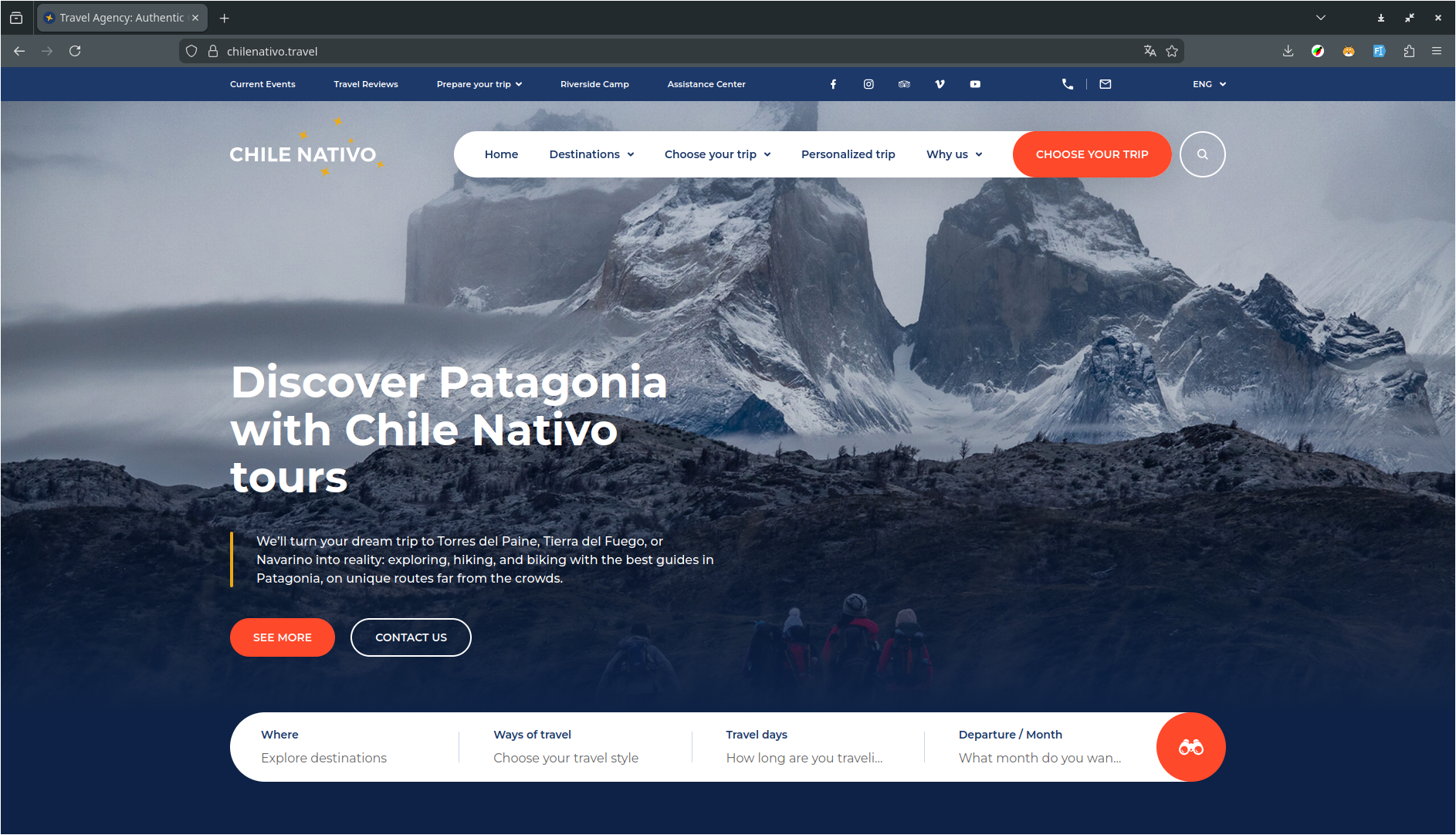
Chile Nativo: Patagonia Travel Website
Chile Nativo is a travel tour website for Patagonia experiences, built …
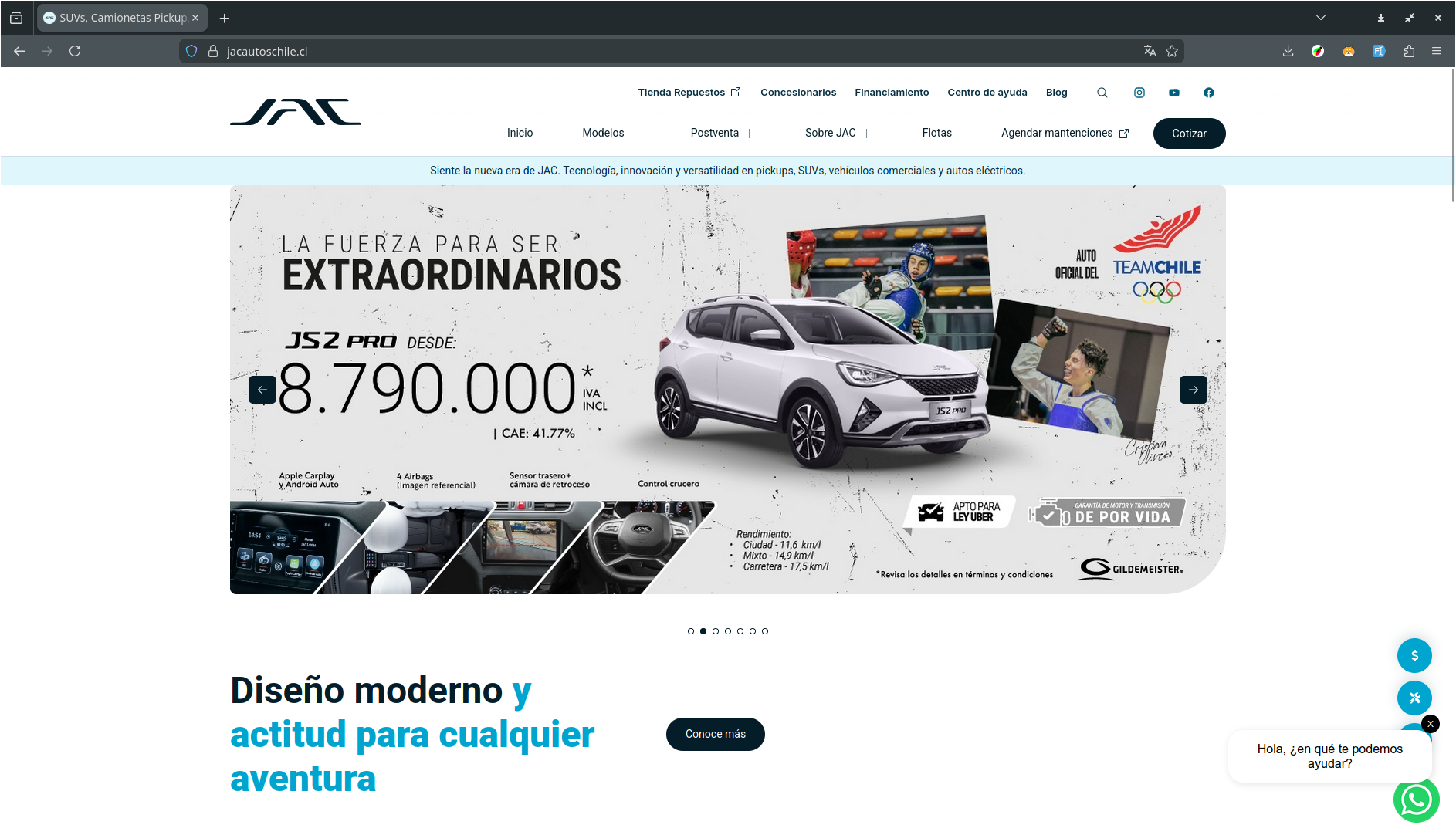
JAC Autos Chile: Automotive Website
JAC Autos Chile is a comprehensive automotive website built on top of …

ISC Chile: Educational Consultancy Website
ISC Chile is an educational consultancy website for study abroad …